Phoenix Property Management: Submarket Pricing Guide
Introduction
Phoenix property management is not a one-size-fits-all approach. Rental pricing can vary significantly depending on the submarket, even within a short drive. Arcadia rental rates, North Phoenix leasing trends, and West Valley pricing all behave differently based on demand, property type, and tenant profile.
For rental owners across Phoenix, Scottsdale, Glendale, and surrounding areas, understanding these submarket differences is critical to avoiding vacancy, attracting qualified tenants, and maximizing long-term returns. This guide breaks down how pricing varies across key Phoenix submarkets and what property owners should be watching in today’s rental market.
Why Do Phoenix Rental Prices Vary by Submarket?
Location, demand, and tenant demographics drive pricing differences.
Even within Phoenix, two similar homes can rent for very different amounts depending on the neighborhood. Pricing is influenced by:
- Proximity to employment hubs (Scottsdale, Tempe, Downtown Phoenix)
- School districts and neighborhood appeal
- Age and condition of the housing stock
- Supply of available rentals in that specific area
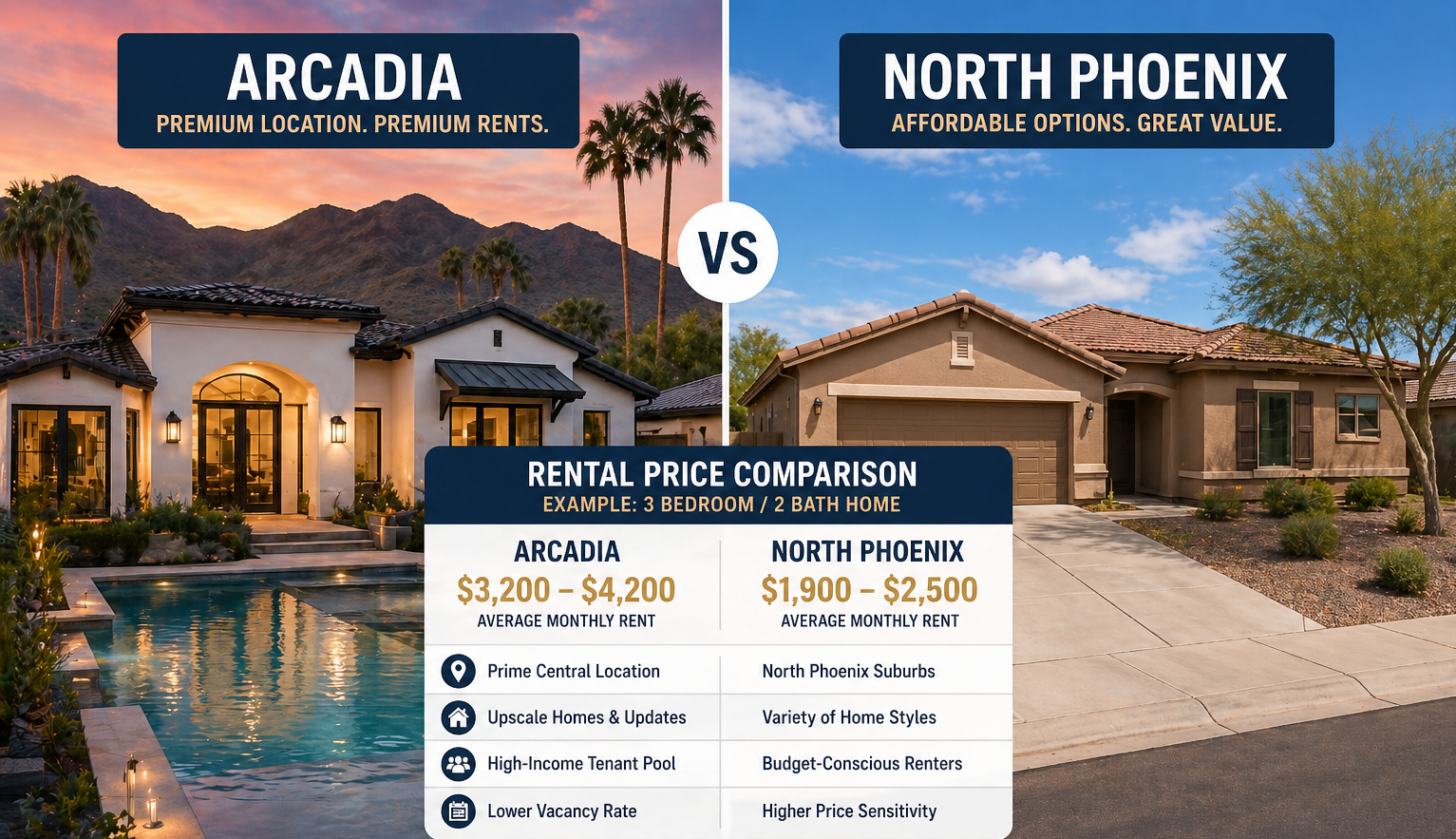
For example, a 3-bedroom home in Arcadia will often command a premium compared to a similar property in North Phoenix due to location, lifestyle, and tenant expectations.
From a property management perspective, pricing correctly at the submarket level is one of the most important decisions an owner can make.
What Are Arcadia Rental Rates Compared to Other Areas?
Arcadia commands premium pricing due to location, lifestyle, and demand.
Arcadia is one of the most desirable rental markets in the Phoenix metro area. Located near Scottsdale and central Phoenix, it attracts higher-income tenants looking for:
- Proximity to dining, retail, and nightlife
- Established neighborhoods with mature landscaping
- Updated or remodeled homes
Typical Arcadia Rental Trends
- Higher average rents compared to most of Phoenix
- Strong demand for updated properties
- Lower tolerance for outdated interiors at premium price points
In our experience managing properties in Arcadia and nearby areas like Biltmore and Paradise Valley, pricing is highly sensitive to condition. A fully updated home can outperform the market, while a dated property may sit longer than expected despite the location.
How Does North Phoenix Compare?
More affordability, broader tenant pool, and higher price sensitivity.
North Phoenix offers a different rental profile compared to Arcadia. It typically attracts:
- Budget-conscious renters
- Families seeking more space
- Tenants prioritizing value over location
North Phoenix Property Manager Insights
- Renters are more price-sensitive
- Condition still matters, but expectations differ from Arcadia
- Wider range of housing types, from older homes to newer builds
For example, a rental in North Phoenix or Deer Valley may compete more directly with properties in Glendale or Peoria, where tenants compare price per square foot rather than lifestyle amenities.
This makes accurate pricing even more critical. Overpricing in these areas often leads to longer vacancy periods.
What About Other Key Phoenix Submarkets?
Each submarket behaves differently based on growth, demand, and inventory.
East Valley (Mesa, Gilbert, Chandler, Tempe)
- Strong demand from families and professionals
- Higher rents in newer, master-planned communities
- Competitive market with relatively quick lease times
West Valley (Goodyear, Surprise, Buckeye, Waddell)
- Rapid growth and new construction
- More inventory, which can create pricing pressure
- Attractive to renters seeking newer homes at lower price points
Central Phoenix and Scottsdale
- Premium pricing driven by location
- Strong demand for renovated homes and modern finishes
- Higher expectations from tenants
Understanding these differences allows owners to position their property correctly from the start.
How Do Phoenix Rental Market Trends Impact Pricing?
Market conditions shift frequently, and pricing must adapt in real time.
Phoenix rental market trends are influenced by:
- Seasonal leasing cycles
- Interest rates and homebuyer demand
- Migration patterns into Arizona
- New construction supply
For example, during peak leasing season, homes in areas like Gilbert or Queen Creek may lease quickly even at slightly higher price points. In slower months, even well-located homes in Scottsdale or Tempe may require pricing adjustments to stay competitive.
One of the most common mistakes we see across properties in Phoenix, Maricopa, and San Tan Valley is setting rent based on outdated comps. The market can shift within weeks.
What Happens When Pricing Is Incorrect?
Overpricing leads to vacancy, underpricing leaves money on the table.
From managing hundreds of rental properties across the Phoenix metro, the pattern is consistent:
Overpriced Rentals
- Sit on the market longer
- Attract fewer qualified applicants
- Often require price reductions
Underpriced Rentals
- Lease quickly but reduce long-term returns
- Can attract a larger applicant pool, but not always the most qualified
A delayed lease-up in Phoenix, even by a few weeks, can cost more than a slightly lower rent set correctly from day one.
How Does Property Management Help with Submarket Pricing?
Data-driven pricing reduces risk and improves outcomes.
Professional Phoenix property management uses:
- Real-time comparable data
- Active listing performance
- Applicant feedback and showing activity
Rather than relying solely on historical data, pricing is adjusted based on current market response.
Learn more about Phoenix property management services
We also often recommend reviewing potential vacancy impact using a vacancy loss calculator:
https://www.realestatebrokersofarizona.com/vacancy-loss-calculator
This helps owners understand how even small delays in leasing can affect overall returns.
What This Means for Phoenix Rental Owners
Submarket pricing is one of the most overlooked factors in rental performance. Whether your property is in Arcadia, North Phoenix, Glendale, or Goodyear, the right pricing strategy depends on local demand, competition, and tenant expectations.
Owners who take a one-size-fits-all approach often experience longer vacancies or inconsistent tenant quality. Those who align pricing with submarket trends typically see stronger, more stable results.
FAQs
Why are Arcadia rental rates higher than other areas?
Arcadia offers a premium location, strong amenities, and high demand, which drives higher rental pricing.
Is North Phoenix a good rental market?
Yes, it attracts a broad tenant base, but pricing must be competitive due to higher sensitivity.
How often should I adjust my rental price?
Pricing should be reviewed in real time during vacancy and adjusted based on showing activity and market response.
Do Phoenix rental prices change seasonally?
Yes, demand is typically higher in spring and summer, which can impact pricing and lease timing.
Should I price higher to leave room for negotiation?
In most cases, this leads to longer vacancy. Accurate pricing from the start is more effective.
Final Thoughts
Phoenix rental market trends are not uniform across the metro area. Understanding submarket pricing differences is essential to maximizing rental income and minimizing vacancy.
If you are evaluating your current rental rate or preparing to list a property, a data-driven approach can help you stay competitive in your specific submarket.
Reach out anytime for a rental analysis tailored to your property and location.