In the Arizona rental market, maintenance is more than just a "to do" list it is a high stakes game of risk management. For landlords in Phoenix, Gilbert, or Mesa, a single ignored leaking pipe or a delayed AC repair isn’t just a nuisance; it’s a potential breach of the Arizona Residential Landlord and Tenant Act (ARLTA) that can lead to lawsuits, rent withholding, or lease termination.
To protect your investment, you must move away from a "fix it when I can" mindset and adopt a risk based decision making framework. Here is how to handle tenant maintenance requests while insulating yourself from legal and financial exposure.
1. Know Your Hard Deadlines: The 5 vs. 10-Day Rule
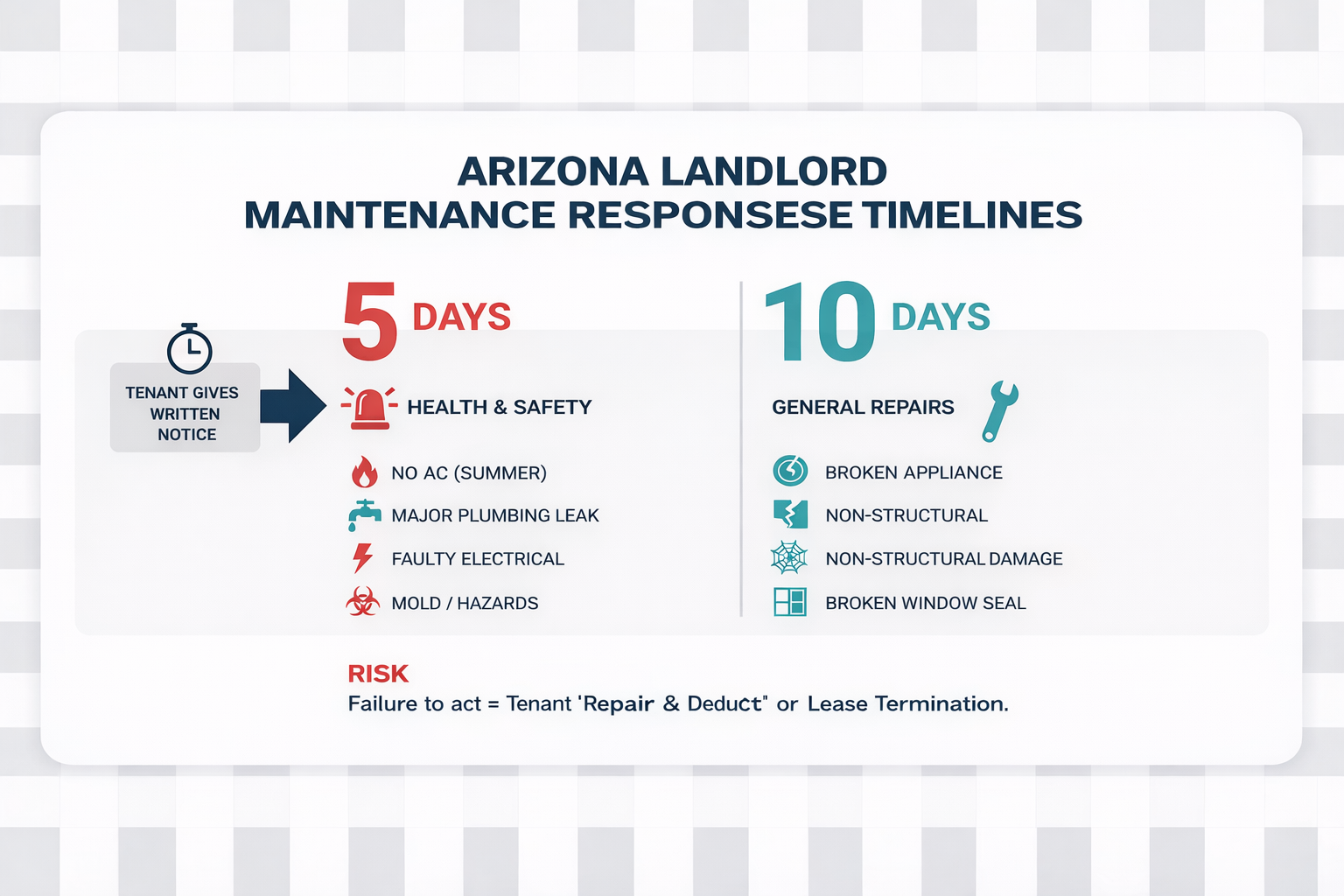
Under Arizona law, not all repairs are created equal. Your "response clock" starts the moment you receive written notice. To minimize risk, you must categorize requests immediately:
Health and Safety (5 Day Cure): If the issue materially affects the health and safety of the tenant think broken AC in 100 degree heat, a major plumbing leak, or faulty electrical you have only 5 days to resolve the breach after receiving notice.
General Repairs (10 Day Cure): For non emergency issues (like a broken dishwasher or a cracked tile), the ARLTA typically allows 10 days for the repair to be completed.
The Risk: Failing to meet these timelines gives the tenant the right to "Repair and Deduct" or even terminate the lease and sue for damages. To understand the full scope of what you are on the hook for, review our guide on how property managers handle repairs and maintenance in Phoenix, AZ.
2. Documentation is Your Best Defense
In a courtroom, an oral agreement doesn't exist. If a tenant claims they reported a leak three weeks ago and you claim they didn't, the person with the better paper trail wins.
Require Written Requests: Use a portal or email to ensure every request is timestamped.
Photo Evidence: Always take "before" and "after" photos. This prevents "scope creep" and protects you if the tenant later claims the repair was insufficient.
Move-In/Move-Out Records: You cannot prove a tenant caused damage without a baseline. This is why move-in and move-out inspections are critical for Arizona rentals.
3. The Financial Trap: Maintenance vs. Capital Expenditure
Risk-based decision making also applies to your wallet. "Patching" an old unit repeatedly is often a higher financial risk than replacement.
Risk Tip: Deferred maintenance is the #1 reason for "vacancy loss" in Phoenix. A tenant who feels ignored will not renew.
Ignoring a small repair today can lead to a $10,000 mold remediation project tomorrow. We’ve broken down the cost of deferred maintenance and why landlords should act fast to help you decide when to repair and when to replace.
4. Navigating "Self Help" and Access Rights
Arizona tenants have the right to "self help" repairs if you fail to act. They can hire a licensed contractor and deduct the cost from the rent (up to $300 or half the monthly rent, whichever is greater).
On the flip side, you must respect the tenant's privacy. Unless it is an emergency, you must provide at least 48 hours’ notice before entering the property for a repair. Violating this can lead to a "harassment" claim, which is a fast track to legal exposure. For more on this, see what are tenants' rights in Phoenix rentals.
The Bottom Line: Proactive is Cheaper Than Reactive
Managing tenant maintenance requests in Arizona requires a balance of speed, statutory knowledge, and clear communication. If you find the legal timelines and vendor management overwhelming, it may be time to get a property management company to handle the liability for you.
Ready to shield your investment from maintenance-related risks?