For many rental property owners, the day a tenant moves in feels like the finish line. The lease is signed, keys are handed over, and rent is collected. In reality, that move in date marks the beginning of one of the most important phases of the tenancy.
The first 30 days after a tenant moves in set the tone for the entire lease. In Arizona, this period is operationally dense, legally sensitive, and full of small issues that can turn into major problems if not handled correctly. Understanding the tenant move in process in Arizona helps owners see why professional oversight early on is not just helpful, but preventative.
Below is a clear, behind the scenes look at what typically happens during the first month of a tenancy and why it matters more than most owners realize.
Week One: Move-In, Documentation, and First Impressions
The first few days are about more than just access to the property. This is when expectations, documentation, and communication habits are established.
During the initial move in period, a property manager is coordinating:
• Final lease execution and verification of all required signatures
• Confirmation of security deposits and first month’s rent in compliance with Arizona law
• Delivery of keys, garage remotes, and access instructions
• Utility confirmations and HOA disclosures
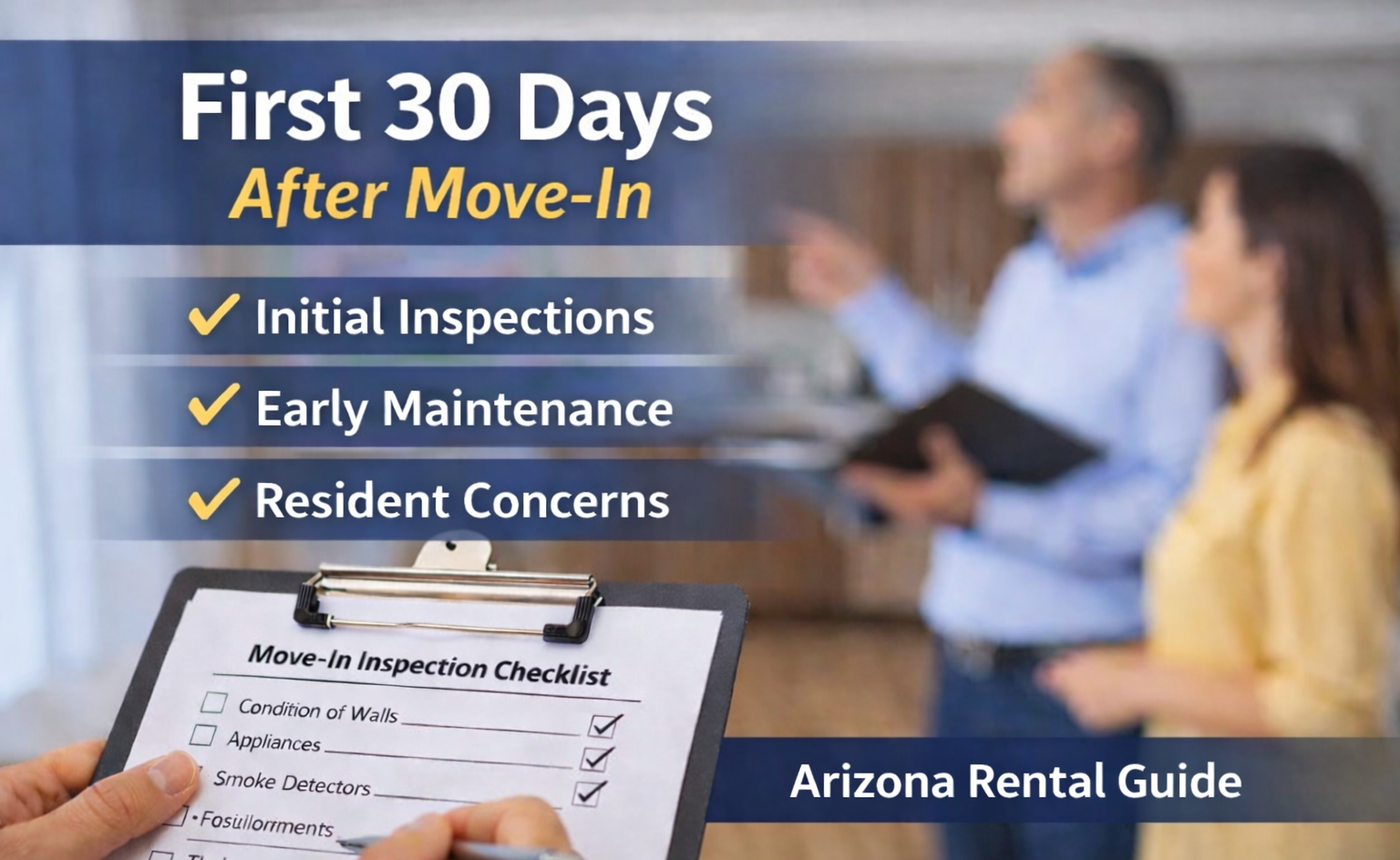
• A detailed move in inspection with photos and condition notes
Move-in inspections are especially critical. In Arizona, documentation created at move in becomes the baseline for future deposit accounting and damage disputes. Poor or rushed inspections often lead to disagreements at move out that could have been avoided.
For a deeper look at why documentation matters, see:
Why Move-In and Move-Out Inspections Are Critical for Arizona Rentals
Weeks Two and Three: Maintenance Requests and Reality Checks
Once tenants begin living in the home full time, previously unnoticed issues often surface. This is normal and expected.
Common requests in the first 30 days include:
• HVAC concerns
• Appliance adjustments or clarifications
• Plumbing or irrigation questions
• Smart home or thermostat confusion
• Minor electrical or safety questions
The way these early requests are handled matters. Prompt, documented responses reinforce professionalism and tenant confidence. Delayed or informal handling can create frustration and set a negative precedent.
This stage is also where professional judgment comes into play. Not every request is a repair, and not every issue is owner responsibility. A property manager acts as the filter between tenant expectations and owner obligations, ensuring repairs are handled appropriately and defensibly.
For insight into managing tenant concerns without escalation, review:
How to Solve Tenant Complaints
Rent Systems, Portals, and Compliance Setup
The first month is also when rent collection systems are tested in real time. Tenants learn how to pay, when payments are due, and what happens if deadlines are missed.
Professional management ensures:
• Online rent portals are set up correctly
• Tenants understand due dates and grace periods
• Late fees and notices comply with Arizona statutes
• All communication is documented
When rent issues arise later in the lease, the paper trail often begins in the first 30 days. Consistent systems and proper notices protect owners if enforcement becomes necessary.
For context on legal enforcement in Arizona, see:
The Hard Truth About Evicting a Tenant Legally in Arizona
Setting Boundaries and Communication Standards
The tenant onboarding period is when boundaries are established.
Who do tenants contact for maintenance?
What qualifies as an emergency?
How are requests submitted?
What communication methods are acceptable?
When these standards are unclear, tenants often bypass processes, contact owners directly, or make assumptions that lead to conflict. A structured tenant onboarding rental property process reduces confusion and protects everyone involved.
Strong communication early on also plays a major role in long term tenant retention. Tenants who feel informed and supported are more likely to follow lease terms and renew responsibly.
Related reading:
Why Good Communication Is the Secret to Tenant Retention
Why the First 30 Days Matter More Than Any Other Time
Most lease disputes, maintenance misunderstandings, and rent issues can be traced back to the beginning of the tenancy. When onboarding is rushed or poorly managed, small gaps turn into long term problems.
Professional property management during the first month provides:
• Clear documentation
• Legal compliance
• Structured communication
• Preventative maintenance oversight
• A consistent experience for tenants
This early investment in process often prevents costly issues later, including disputes, deferred maintenance, and early move outs.
For a broader overview of what professional management includes from day one, see:
What Full-Service Property Management Really Covers From Day One
A Phoenix Property Management Perspective
At Real Estate Brokers of Arizona, we view the first 30 days as the foundation of a successful tenancy. Owners often never see the volume of coordination, documentation, and decision making that occurs during this period, but its impact lasts for the entire lease.
Understanding the tenant move in process in Arizona helps owners make informed decisions about oversight, risk management, and long term property performance. When handled correctly, the first month reduces stress, protects value, and creates stability for both owners and tenants.
You May Also Like
How to Write a Lease Agreement That Protects Your Phoenix Rental Property
What Full-Service Property Management Really Covers From Day One