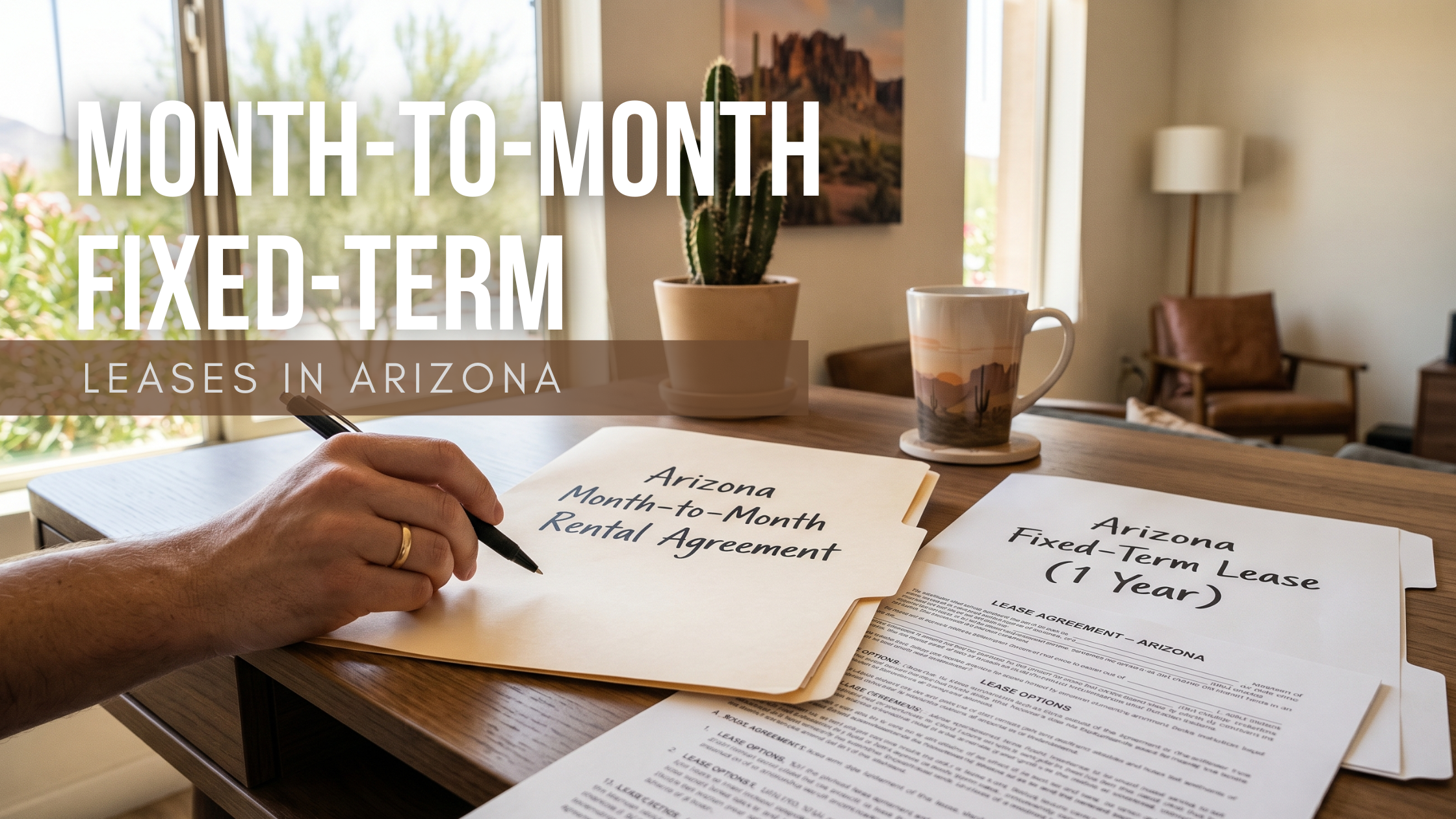
Choosing between a month-to-month lease and a fixed-term lease is an important decisions Arizona landlords make when managing rental properties. The right lease structure affects vacancy rates, cash flow consistency, tenant retention, and long-term profitability.
For landlords across Phoenix, Mesa, Gilbert, Chandler, and surrounding markets, lease strategy should align with both market conditions and investment goals. Managing hundreds of rental properties throughout the Phoenix metro area, we’ve seen how the wrong lease structure can increase turnover costs and create unnecessary income instability.
What Is the Difference Between Month-to-Month and Fixed-Term Leases?
A fixed-term lease locks in tenancy for a set period, while a month-to-month lease renews every month until either party gives notice.
Both lease types are legal under the Arizona Residential Landlord and Tenant Act, but they create very different operational outcomes for landlords.
Fixed-Term Lease
A fixed-term lease typically lasts:
- 6 months
- 12 months
- 18 months
- 24 months
The lease automatically ends on the agreed date unless renewed.
Month-to-Month Lease
A month-to-month lease continues indefinitely until proper notice is given by either the landlord or tenant.
Under Arizona law, landlords generally must provide at least 30 days’ notice for termination or changes to a month-to-month tenancy.
Which Lease Strategy Provides Better Rental Stability?
Fixed-term leases generally provide stronger income stability and lower turnover risk.
For most long-term rental properties in Arizona, fixed-term leases create more predictable cash flow.
Why Fixed-Term Leases Often Protect ROI Better
Reduced Vacancy Risk
A 12-month lease minimizes unexpected move-outs and helps stabilize occupancy.
More Predictable Cash Flow
Fixed rent amounts and longer occupancy periods improve forecasting for:
- Mortgage payments
- Maintenance budgeting
- Property taxes
- Insurance costs
Lower Turnover Expenses
Every vacancy creates costs:
- Cleaning
- Repairs
- Marketing
- Leasing commissions
- Lost rent days
In markets like Tempe, where tenant turnover can happen quickly, reducing even one vacancy cycle can significantly improve annual ROI.
When Does a Month-to-Month Lease Make Sense?
Month-to-month leases work best when flexibility is more valuable than long-term stability.
There are situations where month-to-month agreements are strategically useful.
Situations Where Month-to-Month Works Well
You May Sell the Property Soon
If an owner plans to list the home within several months, flexible occupancy can simplify the sale process.
Seasonal Rental Markets
Areas with fluctuating demand, including parts of Goodyear and Surprise, sometimes benefit from shorter leasing structures tied to seasonal trends.
Tenant Transition Periods
Some landlords use month-to-month terms temporarily after a fixed lease expires while evaluating rent increases or future plans.
Market Adjustment Opportunities
Month-to-month leases allow landlords to react faster to changing rental rates. This can be useful during periods of rapid appreciation or inventory shifts.
What Are the Risks of Month-to-Month Leasing?
Higher turnover and income unpredictability are the biggest concerns.
While flexibility sounds attractive, month-to-month leasing often creates operational instability.
Common Risks We See in Property Management
Unexpected Vacancies
Tenants can leave with relatively short notice, increasing vacancy exposure.
Higher Annual Turnover
More turnover means:
- More maintenance coordination
- Increased leasing costs
- More time off market
Harder Long-Term Planning
Month-to-month properties make it more difficult to forecast:
- Annual income
- Capital improvements
- Occupancy trends
In our experience month-to-month tenants are statistically more likely to relocate unexpectedly compared to tenants on fixed annual leases.
What Lease Structure Works Best in Phoenix?
Real estate investors, Jamison and Dustin Briley, have found that most landlords benefit from fixed-term leases with strategic renewal planning.
Our Practical Recommendation
For most single-family rentals:
- Start with a 12-month lease
- Evaluate tenant performance carefully
- Renew strong tenants strategically
- Use month-to-month only when flexibility provides a clear advantage
This approach balances:
- Occupancy stability
- Rent growth opportunities
- Lower turnover costs
- Predictable operations
Arizona Legal Considerations for Lease Terms
Key Compliance Areas
- Proper notice periods
- Security deposit handling
- Lease termination procedures
- Rent increase notifications
- Holdover tenancy language
Poorly written lease terms create avoidable legal disputes and operational challenges.
This is one reason many landlords use professional managers rather than relying on themselves. Arizona Realtors website has sample leases and contracts you can review.
FAQ
Are fixed-term leases better for landlords in Arizona?
In most cases, yes. Fixed-term leases usually provide better rental stability, lower turnover, and more predictable income.
Can a landlord raise rent on a month-to-month lease in Arizona?
Yes, but landlords must provide proper written notice under Arizona law before the increase takes effect.
Is month-to-month leasing riskier?
Generally, yes. Month-to-month agreements often lead to more frequent turnover and less predictable occupancy.
What lease term is most common in Phoenix rentals?
Twelve-month leases are the most common structure for single-family rental homes in the Phoenix metro area.
Should landlords automatically renew good tenants?
Yes, retaining strong tenants is often more profitable than replacing them.